

Dance Notation System
Five Sacred Dances, One Eternal Spirit
Korean traditional dance is not entertainment—it is philosophy made visible, history embodied, spirituality in motion. Each gesture carries centuries of meaning; every rhythm connects to the pulse of Korean identity.
These are not "folk dances" to be performed casually. They are intangible cultural heritage, protected by UNESCO principles, mastered only through decades of dedicated study under lineage-holding masters.
Professor Kim Ji-won is one of the few living practitioners who has mastered the complete repertoire under direct transmission from historically significant masters.

Salpurichum
.jpg)
Ssanggeommu

Seungmu

Sogochum

Taepyeongmu
살풀이춤
Salpurichum
The Soul-Cleansing Dance
Origin
Shamanistic rituals, adapted by Han Seong-jun (1874-1942)
Key Element
Long white scarf (sugeon)
Duration
12-15 minutes
Status
Important Intangible Cultural Heritage
The Philosophy
Salpurichum is often misunderstood as a "dance of han (sorrow)." But Professor Kim reinterprets it as a dance of transformation—not wallowing in grief, but transcending it.
The white scarf represents burdens we carry; the dance is the process of release, purification, and ultimately, liberation into heung (joy).
The scarf never leaves the dancer's hand—like life's connections, we don't abandon what we've loved. We transform our relationship to it.
Movement Vocabulary
-
Circular arm patterns (representing life cycles)
-
Undulating fabric flows (releasing energy)
-
Sudden stops & starts (moments of realization)
-
Ground-level movements (humility, connection to earth)
In Entertainment
When BTS's Jimin performed his solo using Salpurichum-inspired movements with a white cloth, he captured global audiences because the movement language speaks universally—even without cultural context, viewers feel the emotional journey from constraint to freedom.
"Professor Kim's teacher once told her: 'To dance Salpurichum, you must first love more, lose more, and understand what it means to let go.' This is not a dance learned from technique alone."
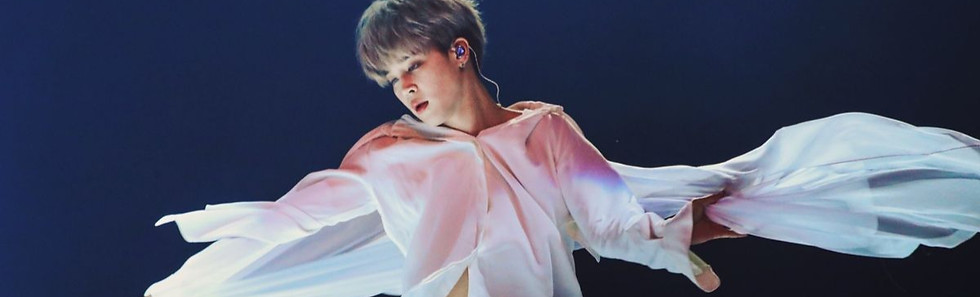


Salpurichum
쌍검무
Ssanggeommu
The Double Sword Dance
Origin
Choi Seung-hee creation (1930s-40s)
Key Element
Two traditional swords, warrior costume, horn headdress
Duration
10-12 minutes
Status
Choi Seung-hee → Jeon Hwang → Kim Ji-won
The Philosophy
Unlike other sacred dances focused on internal spirituality, Ssanggeommu is Korea's warrior spirit made visible. But it's not brutality—it's disciplined power, aesthetic violence, beauty in strength.
Choi Seung-hee created this dance when Korea was under Japanese occupation, channeling national pride and resistance into artistic form. Every sword strike is a reclamation of Korean identity.
Historical Significance
This dance is exceptionally rare. After Choi Seung-hee defected to North Korea during the Korean War, her choreographic legacy was nearly lost. Jeon Hwang, her direct student, preserved and enhanced this work. Professor Kim is among the last living practitioners of the authentic Choi Seung-hee/Jeon Hwang lineage.
In Entertainment
Ssanggeommu is ready-made action choreography. The sword work rivals anything in wuxia films or anime, but it's rooted in authentic Korean martial aesthetics—not Chinese, not Japanese. For animation or live-action seeking "Korean John Wick," this is the foundation.
"Of the thousands of Korean traditional dancers worldwide, fewer than 20 have learned authentic Ssanggeommu from the Choi Seung-hee lineage. Professor Kim is one of them."


Ssanggeommu
승무
Seungmu
The Monk's Ecstatic Meditation
Origin
Buddhist temples, secularized in 20th century
Key Element
Jangot (long sleeves), Beopgo (drum), Gokkal (hat)
Duration
15-18 minutes
Status
Important Intangible Cultural Heritage
The Philosophy
Seungmu portrays a Buddhist monk's internal struggle between worldly attachments and spiritual enlightenment. It begins with stillness—the dancer prostrate on the floor, symbolizing the weight of earthly desire.
As the dance progresses, the monk rises, struggles, and ultimately achieves moments of transcendent peace. The long white sleeves become wings, chains, prayer gestures, and finally, liberation itself.
Three-Act Structure
-
Awakening (0-5 min): Slow rise from floor, internal conflict
-
Struggle (5-12 min): Drum sequences, faster rhythms, peak intensity
-
Transcendence (12-15 min): Return to stillness, enlightenment achieved
In Entertainment
The visual spectacle of Seungmu—white fabric floating in darkness, punctuated by drum strikes—creates cinematic moments. Imagine this in animation: each sleeve movement could release light particles, each drum strike could pulse energy waves. The spiritual journey IS the action sequence.
The hanbok costume alone takes 15 minutes to don correctly. The jangot sleeves are over 4 meters in combined length. Everything about Seungmu demands precision, patience, and reverence.
Ssanggeommu


Seungmu

소고춤
Sogochum
The Joyful Drum Dance
Origin
Nongak (farmers' music), adapted for stage
Key Element
Sogo (small hand drum with ribbons), vibrant costume
Duration
8-10 minutes
Status
Celebration, harvest festivals, community joy
The Philosophy
If Salpurichum is catharsis and Seungmu is contemplation, Sogochum is pure, unfiltered Korean heung (흥)—the spontaneous joy that erupts when Koreans come together.
This is not "cute" or "simple"—Sogochum requires extraordinary technical skill disguised as effortless fun. The sogo must spin, the ribbons must never tangle, the rhythm must be precise even while the dancer appears to be improvising with abandon.
Movement Vocabulary
-
Rapid shoulder shimmies (eokkaechum, 어깨춤)
-
Drum spins and tosses
-
Ribbon control (centrifugal force mathematics)
-
Explosive jumps and dynamic level changes
In Entertainment
Sogochum translates directly to stadium concert energy. K-pop choreography owes massive debt to Sogochum's dynamic, high-energy aesthetic. When you see K-pop groups do synchronized shoulder moves—that's eokkaechum, the soul of Sogochum.
The ribbons on a sogo are precisely calculated—too short, they don't create visual impact; too long, they tangle. Master dancers can spin the sogo for minutes without missing a beat.
Ssanggeommu


Sogochum

태평무
Taepyeongmu
The Dance of Great Peace
Origin
Han Seong-jun (early 20th century)
Key Element
Symbolic mat with taiji and trigram symbols
Duration
12-15 minutes
Status
Considered the most challenging Korean dance
The Philosophy
Taepyeongmu is a prayer made physical—a wish for national peace, prosperity, and cosmic harmony. The dancer never steps outside the symbolic mat (representing the universe); every foot placement is intentional, connecting to Korean cosmological beliefs.
This dance was created during Japanese occupation, expressing the Korean people's yearning for peace and sovereignty. Its name—"Great Peace"—was both aspiration and quiet resistance.
Technical Mastery
-
Intricate footwork (hundreds of patterns documented)
-
Minimal upper body movement (focus on feet)
-
24 directional changes (matching Korean cosmology)
-
Balance and centeredness (never rushing, never stopping)
In Entertainment
For animation, imagine Taepyeongmu as a magical sealing ritual—each foot placement activates a symbol, building toward a climactic moment when the entire pattern illuminates. The constraint (must stay on the mat) creates dramatic tension.
Professor Kim's teacher told her: 'When you can dance Taepyeongmu while carrying on a conversation without breaking rhythm, you will have achieved true mastery.' It took her 15 years.
Ssanggeommu


Taepyeongmu

Han → Heung Journey
Characters have arc: suffering → resilience → joy
Stories have emotional dynamics
Universal human experience
Broad commercial appeal
Reinterpretation
From Han to Heung
For decades, Western scholars and even some Koreans have described traditional Korean arts as expressions of "han"—a uniquely Korean feeling of unresolved sorrow, resentment, and yearning.
Professor Kim challenges this interpretation.
"Han is part of the story," she explains, "but not the whole story. Korean culture has always been about transforming suffering into joy—that's heung. We don't wallow; we celebrate survival. Even at funerals, Koreans gather, drink, tell stories, and find ways to laugh together through tears."
승무
Seungmu
The Monk's Ecstatic Meditation
Origin
Buddhist temples, secularized in 20th century
Key Elements
Jangot (long sleeves), Beopgo (drum), Gokkal (hat)
Duration
15-18 minutes
Status
Important Intangible Cultural Heritage
The Philosophy
Seungmu portrays a Buddhist monk's internal struggle between worldly attachments and spiritual enlightenment. It begins with stillness—the dancer prostrate on the floor, symbolizing the weight of earthly desire.
As the dance progresses, the monk rises, struggles, and ultimately achieves moments of transcendent peace. The long white sleeves become wings, chains, prayer gestures, and finally, liberation itself.
Three-Act Structure
-
Awakening (0-5 min): Slow rise from floor, internal conflict
-
Struggle (5-12 min): Drum sequences, faster rhythms, peak intensity
-
Transcendence (12-15 min): Return to stillness, enlightenment achieved
In Entertainment
The visual spectacle of Seungmu—white fabric floating in darkness, punctuated by drum strikes—creates cinematic moments. Imagine this in animation: each sleeve movement could release light particles, each drum strike could pulse energy waves. The spiritual journey IS the action sequence.


